Email marketing remains one of the most effective channels available to businesses. But too many campaigns fail because they lack a clear purpose. Understanding the different types of email marketing is the first step towards building a programme that consistently converts.
Why Email Type Matters
Emails that do not know their audience or their purpose in the buyer journey quickly end up in spam folders or deleted without being read. Categorising your emails by type gives each one a clear job to do — and makes your overall programme far more effective.
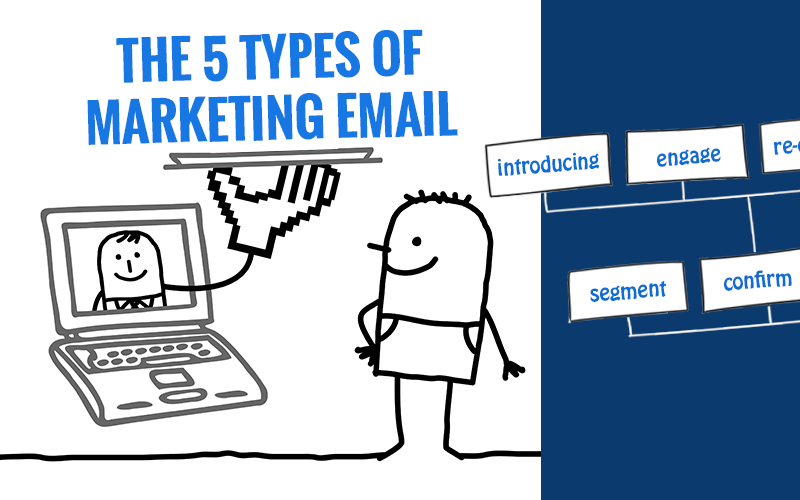
The 5 Types of Email Marketing
1. The Introduction Email
Also known as the welcome email, this is one of the most important messages your business will ever send. It is the first direct contact between your brand and a new enquiry. Get it right and you set the tone for a lasting relationship.
Tailor the content to the channel through which the prospect came to you. Acknowledge their interest and offer something of immediate value. Read our guide to writing a welcome email for practical advice.
2. The Engagement Email
Engagement emails promote specific products or services. Their most common failure is being sent to the wrong people. Make sure you know what each segment of your audience is interested in before you send.
Engagement emails need not be purely promotional. Including useful content, social campaigns, or relevant industry news builds organic interest in your brand over time.
3. The Segmentation Email
Before you can personalise at scale, you need to understand your audience. Segmentation emails help you divide your database into meaningful groups based on preference, behaviour, or intent.
Use surveys, preference centres, and link-tracking to gather this intelligence. The more you know about each contact, the more relevant your future communications become — and the higher your conversion rates will be.
4. The Confirmation Email
A completed purchase or sign-up is not the end of the journey — it is the beginning of a new one. Confirmation emails are a valuable opportunity to cement loyalty, encourage repeat purchases, and invite feedback.
Prospects have demonstrated real trust in your brand by buying from you. Use the confirmation email to reward that trust and lay the groundwork for a long-term relationship.
5. The Re-engagement Email
Every database contains contacts who have gone quiet. Re-engagement emails attempt to restart the conversation — with fresh content, a compelling offer, or simply a check-in to ask if there is anything they need.
Be specific and relevant. A generic “we miss you” email rarely works. Personalise the message based on what you know about each contact’s previous behaviour.
Build a Programme That Works
Every email you send should fit clearly into one of these categories. If it does not, ask yourself why you are sending it. Purposeless emails damage your sender reputation and frustrate your audience.
Email marketing works best when it is part of a structured lead nurturing strategy. See our posts on lead nurturing tips and personalising your email marketing automation to learn more.
Explore our email marketing services or get in touch to discuss how we can help you build a programme that converts.